Dragon Lantern Dance 窜龙灯
There was a dragon lantern dance performance just now at the mall entrance. Lunar New Year’s Eve and the Spring Festival are in two weeks. In Shenzhen, there are lion dances in malls every year during the Spring Festival. This is the first time I’ve seen a dragon lantern dance in Shenzhen.
In my hometown, many villages have dragon lantern dances on the fifteenth day of the first lunar month. Traditionally, on the fourteenth and fifteenth, the dragon lantern troupe visits people’s homes to offer New Year’s greetings. When the dragon lantern troupe arrives, the homeowner will set off firecrackers to welcome them, and then both sides will exchange auspicious greetings. The dragon lantern will first enter the kitchen, and then perform a few acts in a spacious open area in front of the house. After the performance, the homeowner will give the dragon lantern troupe a red envelope as a token of gratitude.
Generally, the dragon lantern troupe doesn’t visit every household. They usually need to confirm beforehand and then visit each house in order of location. When the dragon lantern troupe arrives, sometimes the neighbors will also set off firecrackers to welcome them, even though the dragon lantern troupe may not actually visit their house later. This is a childhood memory, somewhat hazy, but I remember it being very lively and the atmosphere very enthusiastic. The dragon lantern procession, in particular, had drummers and cymbal players, so you could say it was a live band setup; the entire procession was a live show. One image of the dragon lantern has always been vividly etched in my memory: on the fourteenth day of the first lunar month in fourth grade, in the darkness, a long, glowing dragon (with lights inside) slowly moved forward above a long canal in the distance. That feeling was truly magical.
(刚才商场门口有窜龙灯表演。再过两星期就是除夕和春节了。在深圳每到过年的时候商场里会有舞狮。这是我第一次在深圳看到窜龙灯。
在我老家很多村子正月十五的时候都有窜龙灯。传统上正月十四和十五龙灯会去到人家拜年。当龙灯队伍走来时,这家的主人会打鞭炮欢迎,然后双方互道节日的吉祥话语,然后龙灯会首先进到厨房,然后再到门口宽敞的平地进行些许的表演,表演过后主人会包一个红包给龙灯队表示感谢。
一般来说龙灯队并不会去每户人家,一般是需要提前先确认过,然后按各家的位置顺序依次拜年。当龙灯队到时,有时旁边的邻居也会打鞭炮表示欢迎,虽然等一下龙灯队可能并不会去他家拜年。这是我儿时的记忆,有一些模糊了,只记得很热闹,气氛很热烈,尤其龙灯队伍是配备鼓手和镲手的,所以可以说窜龙灯队伍是一套live band配置,而窜龙灯的乐和舞全程都是live show。关于龙灯有一个画面一直印象深刻:四年级那年的正月十四,夜色中,面前远处亦不远处,一条长长的发光的大龙(龙灯里面有灯)在那条长长的水渠上空缓缓前行。那种感觉真的太奇妙了。)
Gods 神明

Today is the Gregorian New Year, January 1, 2026. The qualifier “Gregorian” is added primarily because for most Chinese people, there is another New Year, the Spring Festival (Chinese New Year). The Spring Festival is the Lunar New Year. The Lunar New Year is determined by the intercalation of the Gregorian and lunar calendars.
Last night, in the middle of the night, I heard fireworks going off in the distance. They were very loud, and the fireworks must have been beautiful. It was really nice. But generally speaking, for Chinese people, the Gregorian New Year, besides officially adding one year to the calendar and marking the beginning of a new year, is a significant day, more like a holiday than a festival. It has a different celebration style from the Spring Festival.
Holidays and festivals always seem to belong more to children. The Spring Festival goes without saying, in my memory, as Christmas approached, classmates would rush to buy postcards—all sorts of postcards, brand new ones, bought in sets, then write blessings on them to give to classmates and teachers. Of course, there were also beautiful greeting cards, especially Christmas cards. Some were battery-operated and could sing, and there were various cut-out Christmas tree cards, adorned with sparkling glitter—very gorgeous. Some children would write “Merry Christmas & Happy New Year” on the cards, even though they didn’t know any English. Children always enjoyed it very much. It was a completely different scene from the Spring Festival, other festivals, or local festivals.
So what are festivals like? What are the ways of festivals? Generally speaking, the essential elements include: delicious food, a big meal, and visiting relatives and friends. If it’s Chinese New Year, people will also buy new clothes. Today, I suddenly thought that there is another major element in traditional festivals—worshiping the Gods. Worshipping the Gods of the kitchen—the Kitchen God, the Gods of the living room, the Gods in front of the gate, as well as the ancestors in the ancestral hall, and the Earth God. Every place requires offering tribute, lighting candles and incense to worship, setting off firecrackers, burning paper, all following the same process and ceremony. Now thinking about it, one of the main reasons why I feel the festive atmosphere was stronger when I was a child is the worship ceremony that every household started early in the morning. Early in the morning, everyone gets up to prepare chicken, duck, and fish offerings, which takes a lot of time. Then, they set up plates, light candles and incense, set off firecrackers, and burn joss paper. The whole morning, people are busy, and the sound of firecrackers adds to the liveliness. Worshipping Gods makes the festival more solemn.
A question that has never appeared before has arisen: why do people worship Gods during festivals? On the first and fifteenth day of each lunar month, people worship Gods. If we ask why worship Gods on the first and fifteenth day, the answer is because it is the first and fifteenth day of a lunar month. So, regarding the worship of Gods during festivals, I wonder if one of the reasons is that people use this ritual to tell Gods that today is a festival and that everyone will eat a big meal, and also to express people’s gratitude to Gods in the form of worship?
(今天是阳历的新年,2026年1月1日。添加一个定语“阳历”主要是对于大部分中国人来说,还有一个新年,也就是春节的过年。春节是农历的新年。农历是阳历和阴历的合历。
昨天晚上,半夜里我听到远处传来放烟花的声音,声音很大,烟花一定很漂亮。真不错。但是总的来说,对中国人来说阳历的新年除了年份的数字正式地加1,时间进入了新的一年,是标志性的一天,它更像是假日而不是节日。它和春节是不一样的庆祝模式。
不管节日还是假日似乎总是更多地属于小孩子。春节不用说,在我的记忆中,每当临近圣诞节时,同学们便纷纷开始购买明信片,各种各样的明信片,很新很新的明信片,一套一套地买,然后写上祝福语送给同学和老师。当然还有精美的贺卡,尤其是圣诞节的贺卡,有些是带电池可以唱歌的贺卡,还有各种剪形了的圣诞树贺卡,带亮晶晶的闪粉很是华丽。有些小孩会在贺卡上写Merry Christmas & Happy New Year, 虽然他们压根儿不会英语。在那几天里小孩们总是乐在其中乐此不疲。那是和春节或者其它节日或者当地特有的节日完全不一样的场景。
那过节是什么样的呢。过节的庆祝模式是什么呢?总的来说必备的元素有:美食,吃大餐,走亲访友。如果是过年的话大家还会买新衣服。我今天突然想到传统上过节其实还有一大元素——敬神。敬厨房的神明——灶神,敬客厅的神明,敬大门口的神,以及敬祠堂祖先和敬土地公。每处都需摆贡品,点蜡烛燃香参拜,烧纸,点鞭炮,都是相同的流程和仪式。现在想想为什么感觉小时候过节的氛围更浓,一大原因就是家家户户一大早开始的敬神仪式。一大早大家就起来准备鸡鸭鱼贡品,这会用去很大一块时间,然后装盘摆盘,点蜡烛燃香,燃纸,点鞭炮,整个上午人们忙忙碌碌,加上鞭炮声的烘托很是热闹。敬神让节日变得更隆重。
一个从来没有出现过的疑问出现了:过节的时候人们为什么要敬神?每逢初一和十五要敬神,如果问为什么初一和十五要敬神,答案是因为是初一和十五。所以关于过节敬神,我在想原因之一是不是人们通过敬神这个仪式告诉神明们今天过节,大家今天会吃得很丰盛,然后以敬神的形式告诉和感谢神明们?)
One Year and Festivals



Today is December 29, 2025. In a few days, it will be the Gregorian New Year, January 1, 2026. A few days ago was Christmas, and a few days before that was the winter solstice in the Northern Hemisphere. In China, the winter solstice is both a meteorological solar term and a festival. This year, the winter solstice falls on December 21st. The winter solstice is the day with the shortest daylight hours. For thousands of years, from the ancient Central Plains to the present day, at noon on this day, the shadow of the sun on a gnomon falls on the farthest line of the winter solstice. In my diagram, the projection of the sun at noon on the winter solstice onto the gnomon is the first straight line appearing in the three GIF Tai Chi diagrams in the gallery; it is pure black because the sun’s shadow on the gnomon extends from the summer solstice line all the way to the winter solstice line.
I feel like I’m about to say a lot about these three circular Tai Chi symbols, so I’ll stop here for now. I’ve discussed this in my book before. All three are quite unique. In general, if you understand the longest line, the winter solstice line, you’ll fully understand my three Tai Chi diagrams. It should be noted that the chronological order of the Tai Chi symbols in the double-fish design I am showing here is the same as that of the earliest Taichi symbol used in ancient China to illustrate changes in natural weather. Simply put, the bottom represents the winter solstice, the top represents the summer solstice, the leftmost represents the spring equinox, and the rightmost represents the autumn equinox.
As you can see in these three Tai Chi diagrams, the winter solstice line is always at the bottom, appearing first. I insist on placing the winter solstice line “at the bottom” and as the first line to appear (I believe that in terms of time and quantity, the earliest people followed the rule of bottom to top, while if placed horizontally, it follows the rule of near to far). The winter solstice is a symbolic day, signifying a beginning. The winter solstice line is perpendicular to the horizontal line, but in my straight-line Tai Chi diagram, it is the baseline, the reference line for all other lines. The angles between all other lines and it are the angles in the Tai Chi diagram, while the angle between the winter solstice line and itself is zero degrees. In terms of color, the winter solstice line contains zero red. Yes, the red color gradually decreases from more at the beginning, reaching its minimum on the winter solstice. However, the Earth is constantly revolving around the sun, and by noon the day after the winter solstice, there is no longer a shadow on the winter solstice line on the gnomon. The so-called “birth of one Yang at the winter solstice” does not mean that Yang will naturally arise because Yin has reached its extreme; rather, it means that after Yang decreases from its peak to its minimum, the earth immediately begins to brew more Yang. Of course, the ancients could not see the Earth’s rotation and revolution, but they knew that tomorrow’s shadow would be shorter than today’s.
I think the traditional Chinese celebration of the winter solstice as a festival is similar to one of the established reasons of the Mid-Autumn Festival. The Mid-Autumn Festival falls on the night of the full moon. It is said that on that day, the moon is particularly close to the earth, making people’s emotions more easily affected, leading to greater excitement and anger compared to usual. Thus, the ancient Chinese established the Mid-Autumn Festival as a festival full of warmth and tranquility. People eat mooncakes and admire the large, round moon with their families, creating a beautiful atmosphere. Similarly, the ancients also established the cold winter solstice as a festival not only to celebrate the increasing sunshine of the following day and welcome the new year, but also for a similar reason: to dispel the cold through celebration. In my memory, the winter solstice of my childhood was always very warm. Children helped adults make rice flour balls, the kind of unfilled glutinous rice balls sold in supermarkets today. It is said that rice flour balls represent the round sun. Besides making rice flour balls, every household would also fry rice or popcorn—frying raw rice until it’s fragrant and cooked, or popping paddy rice. They would also steam many kinds of cakes and pastries. The kitchen on the Winter Solstice was always warm and filled with the enticing aroma of food. My memories of the Winter Solstice are of warm, sweet rice flour balls, hot, fragrant popcorn, and delicious steamed rice cakes.
(今天是2025年12月29日。再过几天就是阳历的新年了,2026年1月1日。前几天是圣诞节,再前几天是北半球的冬至日。在中国冬至是一个气象节气也是一个节日。今年的冬至是12月21日。冬至日是日照时间最短的一天。几千年来,从远古至今的中原大地,冬至这天正午时分圭表上的日影投在了最远的那根冬至线上。在我的图形中的话,冬至这天的正午的太阳在圭表上的投影线对应的是画廊里的三张gif太极图中出现的第一条直线,它是纯黑的,因为圭表上太阳的影子从夏至线一直到了冬至线。
感觉接下来我要说很大一段话关于这3款圆形太极,我还是先说到这里吧。前面我在我的书里有关于这个的论述。它们三个都是那么地特别。总的来说如果理解了最长的那根冬至线的话,就能完全理解我的这三张太极图了。需要说明的是我这里展示的双鱼款的太极图的时间顺序同中国古代最早期的用于示意自然气象变化的太极图相同,也就是最下面为冬至日,最上面表示夏至日,最左边表示春分日,最右边表示秋分日。
可以看到在这三款太极图中,冬至线都在最下面,它第一个出现,我坚持把冬至线放在“最下面”以及作为第一根出现(我认为在时间和数量等方面,最早的古人遵从的是先下后上法则,若是平着放则是由近到远法则)。冬至是标志性的一天,冬至意味着开始 。冬至这根线条垂直于水平线,但在我的直线款太极图中它是基准线,它是其它所有线条的参考线,其它所有线条与它的夹角才是在太极图中的角度,冬至线与自己的夹角为零度。从颜色上看冬至线这条线包含的红颜色为零。是的,红颜色从前面的多逐渐地变少然后在冬至日这天变为最少到了极点。然而地球是在不停围绕太阳转地,到了冬至日的第二天正午,圭表上冬至线上不再有日影。所谓的冬至一阳生,并非因为阴的值到了极点理所当然地就会有阳产生,是阳由多变少再变为最少后地球立刻马不停蹄地开始酝酿更多的阳。当然古人看不到地球的自转和公转,但是他们知道明天的日影一定比今天的更短。
我在想传统上中国人把冬至日当做节日庆祝其实和设立中秋节的其中一个原因是相似的。中秋节那天是月圆之夜,据说那天由于月亮距离地球特别近,人们的情绪容易受到影响,相比平时更容易焦躁,于是中国古人便设立中秋节,一个充满温情与宁静的节日,人们吃着月饼和家人们一起欣赏天空中的大圆月,无形中就营造了美好的氛围。而古代人们将寒冷的冬至这天设置为节日除了庆祝明天开始阳会越来越多,迎接新的一年的到来,还有着与中秋节的的设立类似的原因,就是通过庆祝节日无形中就把寒冷驱除掉了。在我的记忆中,儿时的冬至都是非常温暖的。小孩子会帮着大人搓米粉圆子,也就是现在超市里卖的那种不包馅的的汤圆。据说米粉圆子代表着圆形的太阳。除了做米粉圆子,每家每户还会炒米或者炒爆米花,就是把生大米炒成焦香的熟大米,或者把稻谷直接炒成爆米花。还会蒸很多的糕点。冬至那天的的厨房是无比温暖的,始终弥漫着诱人的食物香味。记忆中的冬至是热乎乎的甜甜的米粉圆子,是热乎乎的香喷喷的爆米花还有热乎乎的美味的蒸糕。)
Shenzhen 2025.12.08 27 °C
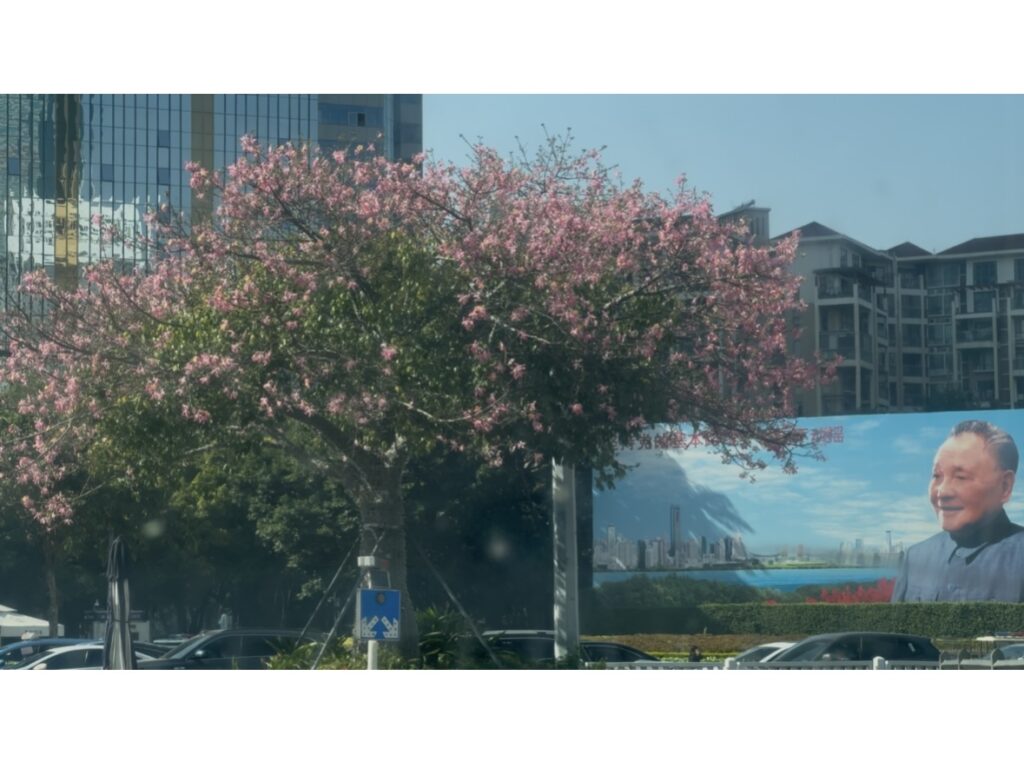
This noon, while waiting at a traffic light on Shennan Road, I saw this tree in full bloom. So I took a picture of it, along with the portrait of DENG Xiaoping. Although the picture wasn’t very clear because I was in a rush, it’s still quite nice, and I like it very much.
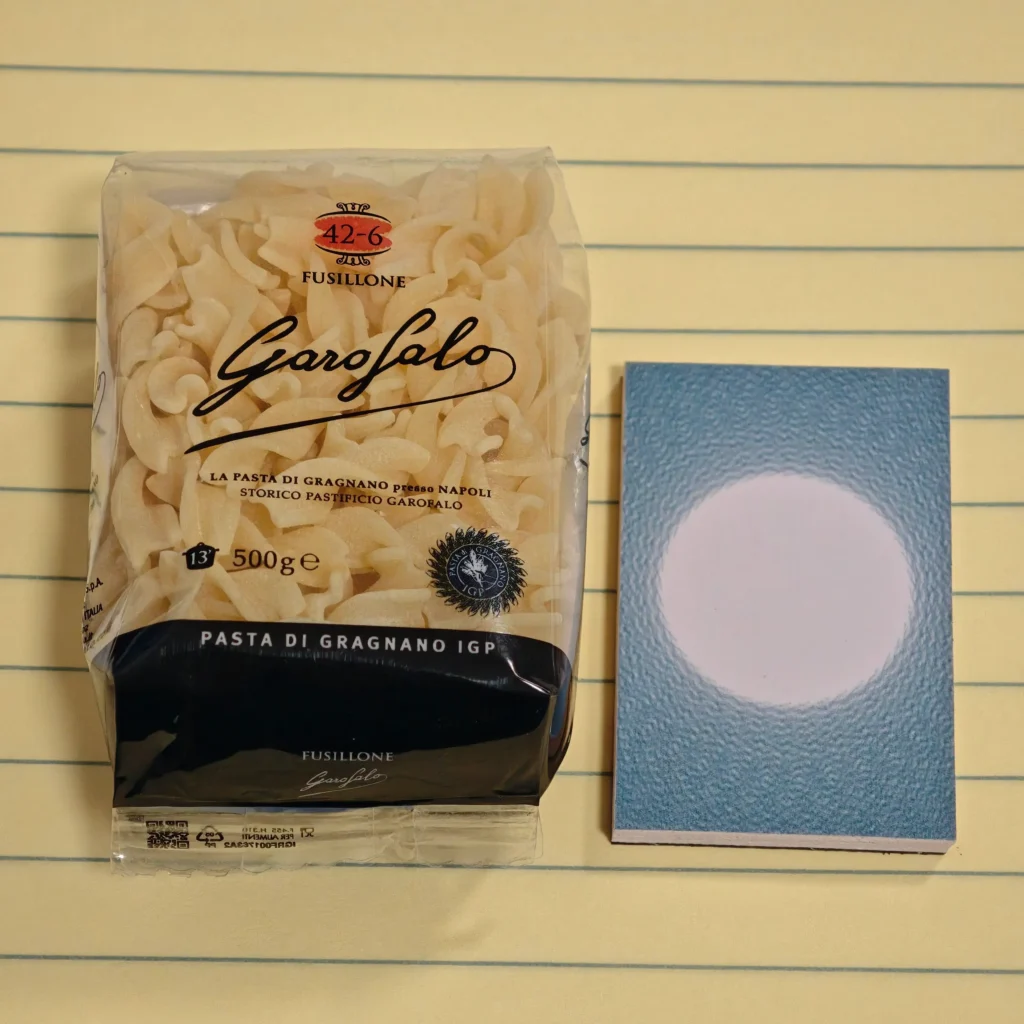
PASTA Refrigerator Magnet from Italy
I bought this pasta fridge magnet at Venice Airport. At first, I thought it was a bag of mini-kitchen pasta, but it’s actually a fridge magnet. The design and quality are excellent. There’s a tiny magnet hidden inside. I bought fridge magnets of other foods before, but these pasta fridge magnets are incredibly realistic. Just be so cute! And even now, every time I see it, I still think of it as a small bag of food, just like the first time I saw it.
World Ping-pong
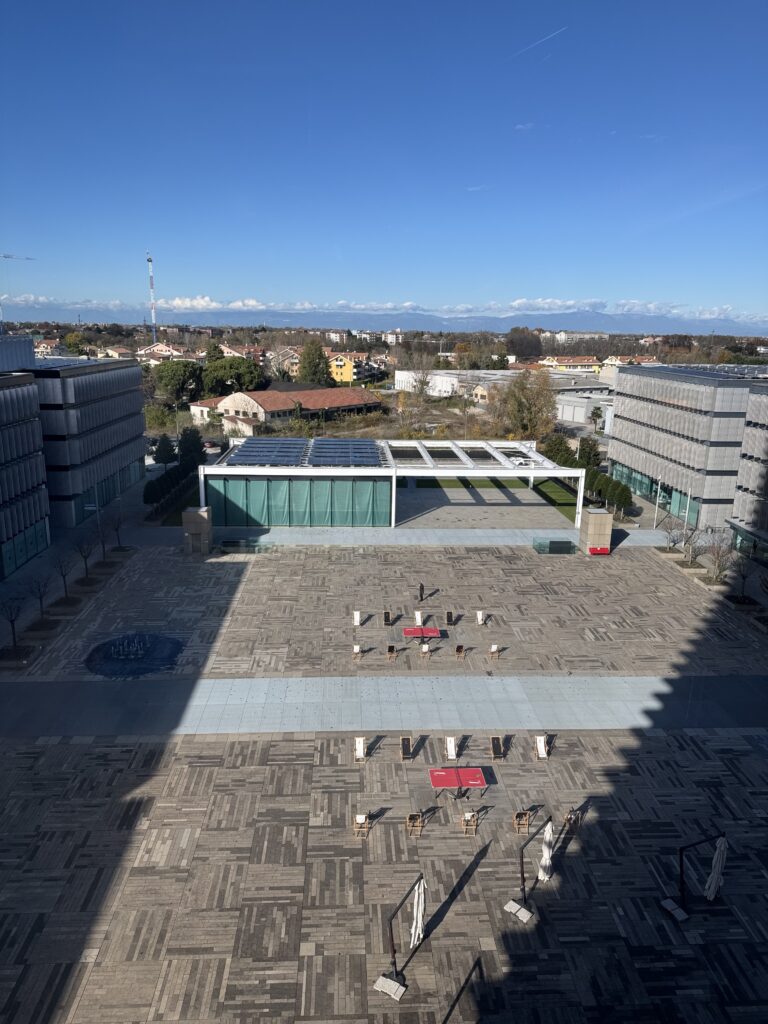
The weather was so nice yesterday. When I drew back the curtains at noon, the view outside was so beautiful. Ping-pong tables were set up in the plaza again. And I saw people playing ping-pong in the square a few days ago.
Seeing people playing ping-pong in Padova was a bit of a surprise. The surrounding buildings are all offices, so it’s nice to play ping-pong in the square during breaks.
People often say “China Ping-pong”, Ping-pong is kind of an element of China, although it is from Europe. Table tennis is popular in China. Traditional Chinese Medicine considers table tennis an excellent sport. The ball is smaller, and the fast pace of the game helps improve cognitive abilities, judgment, and the precision and dexterity of the eyes and hands. In many places in China, such as Shanghai, the government is actively promoting table tennis in schools and communities. I loved playing table tennis from childhood until university, and I still enjoy it now, though playing now requires a space and a partner; sometimes I practice against a wall. For adults, enjoyment is part of the appeal; many treat it as a form of exercise. Playing table tennis daily can subtly change one’s state over time. It’s not about being a pro, but about enjoying each game and, importantly, consistency. Speaking of which, it’s been a long time since I’ve played table tennis. When I return to Shenzhen, I’ll resume my daily half-hour wall-practice.
Saw a Kung Fu Master in Venice
Yesterday, I saw a person on the bus—a local uncle around 60 whose core was incredibly stable. Some of the turns on the roads along the Venice waterfront were really sharp, and I suddenly noticed he was completely still, just like Mountain Tai. Balance is a key element of Chinese Kung Fu, but I had never met anyone skilled in it before; I met one in Italy. And besides the Kung Fu, I glanced at him as I got off the bus, his face’s skin is pure and with a peaceful and calm expression, which is a true Master’s face. Amazing.
”I like it so much!“
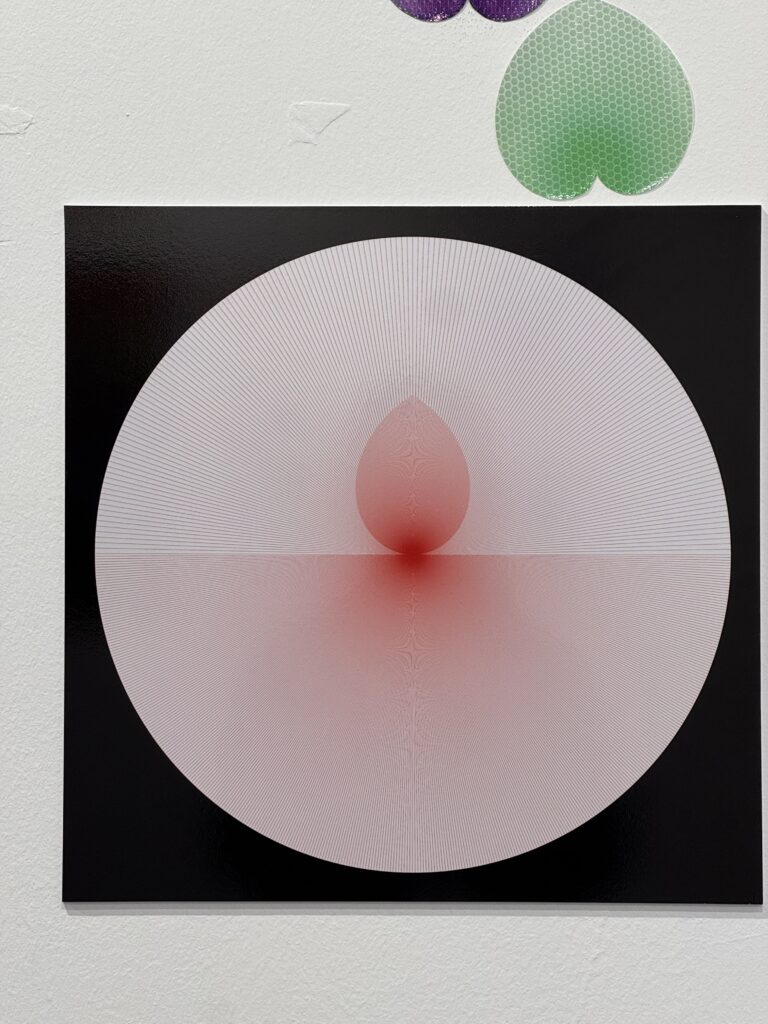
Art is a very free thing. So is visual beauty. A thousand readers will have a thousand Hamlets. Sometimes a design is the same. The other day, a father came to the booth carrying his baby. The baby was very interested in a picture on the wall, and when he saw it from afar, he asked his father to carry him over. When they got closer, he reached out his hand and wanted to touch the painting. He was happy and excited. Afterwards, I wondered why the baby liked this picture so much. There might be two reasons. Perhaps it’s because the “light bulb” or “candlelight” in the painting looks like a small oval, which the baby wanted to hold in his hand. Or perhaps it’s because the red “light bulb” or “candlelight” resembles Mama’s nipple, his favorite and most cherished source of deliciousness.
Meet by Chance when Traveling
I had some delicious food yesterday in the courtyard outside the exhibition hall. I loved the tender texture and perfectly seasoned flavor so much. It was the best kebab I’ve ever had. Amazing
Today is Sunday. I called an Uber this morning, repeating several times as yesterday. Then I prepared to wait even longer than yesterday. And then I saw a familiar name on my phone screen. It was the first taxi I’d called after waiting so long at the bus station roundabout when I arrived in Padova. Padova doesn’t have a huge population, but the city is not small, so can say this was quite a coincidence. The driver was still wearing a modern suit and a scarf, just like that day. I remembered him well because he always pulled the handles each time after taking my heavy suitcases out of the trunk. That image is of a cool guy doing things meticulously and thoughtfully.
A Chinese Traveler to Italy
While writing about traveling to China, I thought about my trip to Italy. In the days leading up to the exhibition, I was actually anxious, worried that my package wouldn’t arrive on time. I had only sent it a few days before the exhibition started, and everything was so rushed. I even made plan B to travel to Milano and other cities of Italy if the package didn’t arrive on time, to see the luxurious architectures, the art and the culture, and experience the long history of urban civilization. Thankfully, my package arrived at my booth the morning before the exhibition’s setup day. So things went very smoothly.
Yesterday I heard the word Panini and suddenly realized that the “sandwiches” I’d been eating for the past several days were actually Italian Panini that I’d had eaten a lot in China, only the Chinese Panini were much smaller than the Padova Panini. Interesting. Of course, there were also pizzas and pasta dishes. I bought a square pizza at the supermarket; I’d always assumed pizzas were round, because all the pizzas I had eaten were round-shaped.
Then I realized that, overall, I’m not very familiar with Italy, yet I’m also very familiar with it, or rather, should say very familiar with certain Italian elements. Long, long time ago’s Fiat Palio, a cute car with a very good and durable engine; sometimes the cool supercars I see on the street are Italian; Armani dresses are beautiful; and China brand dress designed by Italian designer were such outstanding; my favorite pots and pans are Italian. Well many, knowing names or only knowing “that thing”. A customer told me that his son working at a Italian company’s headquarters in China, I didn’t get the group’s Italian name, but after seeing the brand’s Chinese name, then I got it.
I suddenly realized I can “sing” several Italian songs, including classic opera songs and movie songs. And then I remembered that my favorite actor is Al Pacino. Wow.
Travel to China
Some Italian friends chatted with me at the exhibition booth about their travel to China. Some of them had been to China several times, and some maybe had visited other Asian countries but never China. This made me think about the topic of traveling to China. The ones with family or friends working and living in China might not need the information I’m providing, but for those who want to go to China but are unsure how to travel there optimally, this information might be some helpful.
China’s very big cities include Beijing, Shanghai, Guangzhou, and Shenzhen, etc. Beijing is the capital of China. It’s a northern city, Shanghai is the largest city in the Yangtze River Delta, located between the north and south, while Guangzhou and Shenzhen are southern cities. Guangzhou and Shenzhen are very close, about 100-200 kilometers apart. And next to Shenzhen is China Hong Kong. So, for example, if you’re traveling to Guangzhou or Shenzhen, flying to Hong Kong first and then transferring or taking a train to other cities is a good option. Hong Kong is an international city with many international flights, and airfares are usually quite reasonable. I flew to Padova from Hong Kong to Venice this time, which was very convenient. There are 7-seater MPV taxi from Hong Kong Airport directly to Shenzhen, costing around 20 Euros.
Besides major cities, China has many other cities and places to visit, but you usually have to go to a major city first before heading to other places. (to be continued)
(continue, January 6th 2026)Electronic payment in China:
From February 1, 2026, government agencies, public institutions, and businesses will be required to provide cash payment and collection methods.
Electronic payments are highly prevalent in China, permeating every aspect of life. In daily life, WeChat Pay and Alipay are the most commonly used. Contactless payment via chip-embedded bank cards also exists, but is less common. Many people may not need any cash throughout the year. Many elderly people also use WeChat Pay. A large portion of them learned electronic payment passively because QR code payments are ubiquitous. A classic scenario: Several years ago, one evening, an 80-year-old aunt was selling vegetables by the roadside. A 60-year-old aunt passed by, selected 8 Yuan worth of vegetables, and gave the vegetable vendor a 10-yuan note. The vegetable vendor said she didn’t have change and asked the 60-year-old to scan the QR code on her phone. Annoyed as she was, the 60-year-old learned WeChat Pay the next day.
For foreign tourists in China, having WeChat Pay or Alipay greatly facilitates every transaction. Conversely, without these features, it seems like you’d encounter many problems. Although the new government regulations primarily target individuals unfamiliar with electronic payments and also positively affect foreign spending in China, using WeChat Pay and Alipay remains the most convenient way to make purchases in China.
(电子支付在中国
从2026年的2月1日开始,政府机关,事业单位,经营主体等需提供现金收款和付款方式。
电子支付在中国非常非常地广泛,方方面面都是电子支付。在日常生活中人们使用最为多的是微信支付和支付宝。也有接触式的带芯片的银行卡支付,但是不多。对很多人来说,一年中甚至可以一元钱现金都用不到。很多上了年纪的人也会用微信支付。他们其中很大部分人是被动学会电子支付的,因为每个地方都是二维码收款。一个经典的场景:十几年前的一个傍晚,一个80岁的阿姨在路边卖菜,一个60岁的阿姨经过,60岁的阿姨挑了8块钱的菜,然后给了一张10块钱给卖菜阿姨,卖菜的阿姨说没有零钱,找不了,让60岁的阿姨扫描她手机上的收款码。于是一气之下,第二天那位60岁的阿姨学会了微信支付。
外国人在中国旅游,如果有微信支付或支付宝会极大地方便每一次的消费。反之如果没有的话,感觉会遇到很多麻烦。虽然政府新出台规定,除了首先是照顾到不会使用电子支付的人群,对外国人在中国的消费支付也有积极的影响。但仍然在中国消费的话,能用微信支付和支付宝才是最畅通的。)
(continue, January 18th 2026 Sunday)Today’s China Weekend Trips
It’s the weekend. Although it was the New Year holiday two weeks ago, many people still set off on weekend trips on Friday. They leave Friday afternoon or evening and return Sunday afternoon. While it’s a weekend trip, the destinations aren’t limited to the outskirts of cities. Especially with the development of high-speed rail and highway networks, people’s weekend trips have expanded from the outskirts of cities to hundreds or even over a thousand kilometers away—I’m referring to self-driving trips via high-speed rail and highways. High-speed rail, in particular, has reduced a journey of a thousand kilometers from eight or nine hours to four or five hours or even less. Therefore, every weekend, you often see this scene in popular restaurants in tourist cities: one table of customers speaks Shanghainese, clearly tourists; another table speaks Cantonese, also clearly tourists; there are also Hakka speakers, clearly tourists; and then there are other dialects whose origins are unclear, as well as local dialects, and so on. This is a phenomenon. Among them were middle-aged men on road trips, girl students traveling by high-speed rail, mothers with children on weekend getaways, couples, families, and groups of families traveling together, as well as many solo travelers. Another likely phenomenon is that shared electric scooters are rarely available on weekends, as many are already at tourist attractions or in use, mainly due to the large number of weekend travelers. This is especially true for shared electric scooters from companies with large user bases, such as Meituan, which are often in high demand because many are already at tourist sites.
Long-distance weekend trips are common in China. Correspondingly, people’s travel baggage has become simpler because everything is so convenient. Food and other necessities can be purchased locally. Simply place an order on your phone, and the items will be delivered to the hotel lobby within half an hour, and then a robot will precisely deliver them to your room door. This service isn’t limited to luxury hotels; even hotels costing 100 RMB per night offer it. However, it’s usually chain hotels that use robots for delivery. Previously, food delivery apps only delivered meals. Now, in China, these apps not only allow you to buy food from restaurants (like the Meituan app mentioned earlier), but also from supermarkets, wet markets, convenience stores, fruit shops, milk tea shops, hardware stores, and all sorts of other shops. Items like wet wipes, tissues, snacks, and even thermal underwear, gloves, hats, and wool socks—all can be delivered within half an hour using the Meituan app.
Another change is that before, when traveling to another place, you’d always have to research it online beforehand, usually several days in advance. Now, if you’re only going for a day or two, you don’t need to do anything. You just book train tickets on the Meituan app, enter your destination and departure point, then your hotel, and then depart at 5 PM the next day, arriving at your destination 1000 kilometers away at 9 PM.
( 现在的中国 周末游
今天是周末。虽然两个星期前是新年假期,周五出发去周末游的人依旧不少。星期五下午或者晚上出发星期天下午回来。虽然是周末游,但旅游地却未必仅限于城市周边游。尤其是高铁和高速公路网络的发达,人们的周末游已经从曾经的城市周边游扩展到大几百公里甚至一千多公里外了,当然我这里指的是通过高铁和高速公路自驾游的方式。尤其是高铁让一千公里曾经要八九个小时的车程现在只要四五个小时甚至更快。所以,每到周末在旅游城市的人气餐厅里常常会出现这样一个画面:在当地的人气餐厅里,这桌的顾客讲着上海话,显然是来旅游的,那桌的客户讲着广东话,显然也是来旅游的,还有讲客家话的,显然还是来旅游的,还有其它听不出来是哪里的方言的,当然还有讲本地方言的等等。这是一个现象。他们中有结伴自驾游的中年男人,也有结伴高铁旅游的女学生,有结伴带娃周末游的妈妈们,有情侣,有家庭,也有几个家庭结伴游,当然还有很多一个人独自旅行的人们。还有一个可能出现的现象是在周末很难看到一辆空闲的共享电摩托,因为很多都被骑到旅游景点或者被使用中,主要就是因为周末游的人多。尤其是用户群庞大的公司的共享电摩托,比如说美团的电摩托,常常都是一车难求,因为很多都被骑到旅游景点去了。
在中国远距离的周末游很普遍。与之相应也同样发展的是人们的旅行行囊变得简单了。因为一切都很便捷。什么吃的,用的,直接在当地再购买完全可以。只需要在手机上下各种的订单,东西便会在半个小时内送到酒店的大堂,然后后机器人精准送到房间门口。而这样的服务并不是高级酒店才有的,是住一天100元人民币的酒店也有的服务。不过通常来说是连锁酒店才会使用机器人送物品。曾经外卖APP只能送餐,现在中国的外卖APP不仅能买餐厅的食物,比如刚才说的APP 美团APP,还能买超市里的,菜市场里的,便利店里的,水果店,奶茶店,五金店等等各种各样商店里的物品。什么湿纸巾啊,纸巾啊,零食啊,还有要降温了,秋衣秋裤手套帽子羊毛袜等等,全部都可以用美团APP半小时就送到。
想起来还有一个变化是:以前去另外一个地方,多多少少总得先从网上看看它的相关信息,基本上都得提前好几天准备,而现在,如果只是去游玩一两天,现在想去,什么也不用看,直接先订火车票,还是刚才的美团APP,输入火车票,从哪里到哪里,订好车票订酒店,再然后明天下午5点出发,9pm到1000公里外的目的地。)
Patterns Ocean and Sky
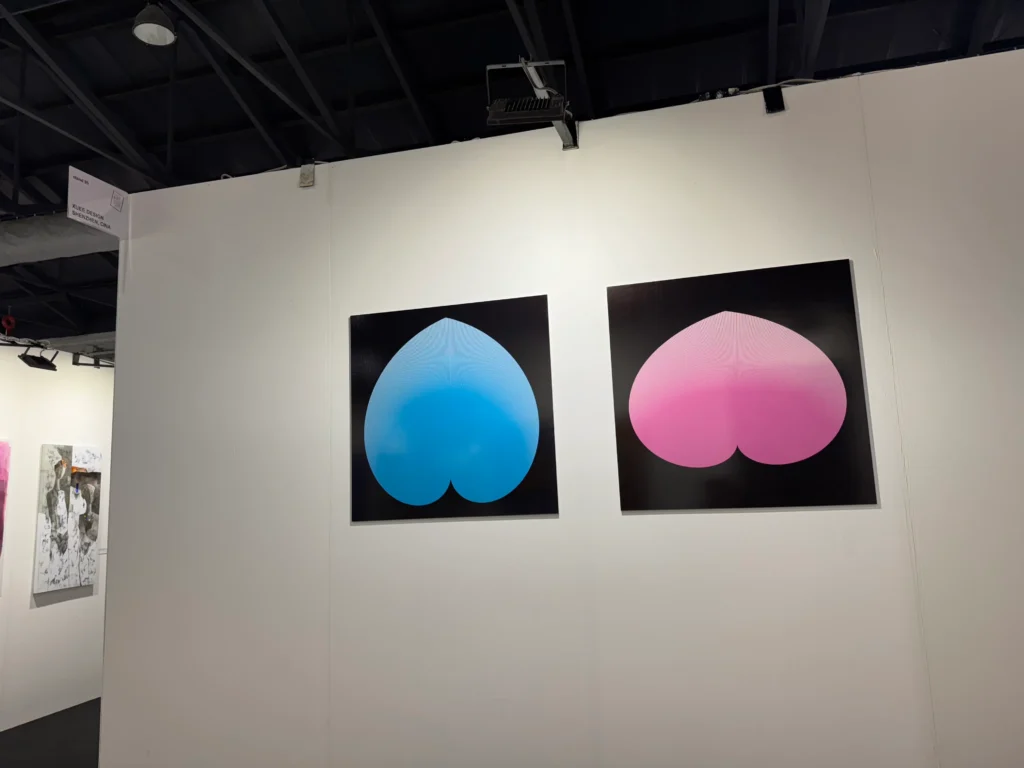
These are two pictures I recently designed. I was particularly struck by them at first glance; they appear so vast, as if they contain the expansive ocean and the boundless sky.
Street Lights in Padova at Night
Walking down the streets of Padova at night, I was suddenly struck by how bright everything was. The streetlights were bright, and the houses along the streets were brightly lit. Even the large square was bright, just like daytime. Amazing.
Chinese Element
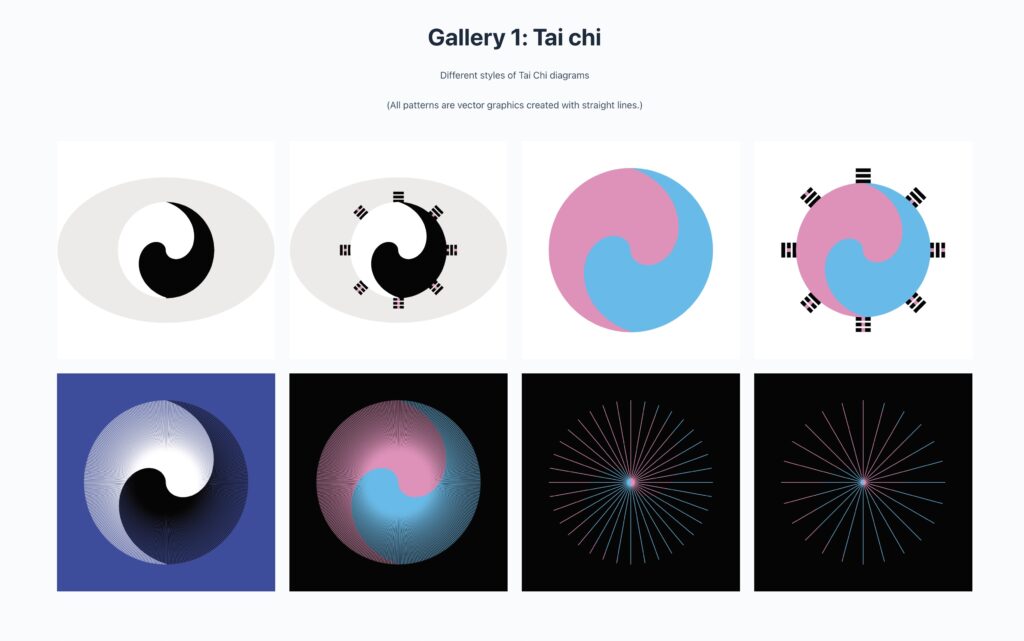
The panda is a very well-known Chinese symbol. The shape in the eight images below is also a very authentic Chinese element, called Tai Chi. If you display one of these pictures at your place or maybe use it as your screen’s wallpaper, Chinese people or those familiar with Chinese culture will immediately recognize the distinctly Chinese atmosphere. Tai Chi symbolizes law ( of development ), balance, and harmony. For Chinese people, the Tai Chi diagram is very mysterious.